Reading and listening are the easy sections to prepare alone: do exercises, check answers, repeat. Writing and speaking are different — you can produce Portuguese all day, but without someone (or something) telling you what is wrong, you are just rehearsing your own mistakes. This is the system I recommend for training both at home, based on the actual exam formats.
First: know exactly what the exam asks
The written production sits inside the Reading & Writing component (45% of your total, 1h15 together with reading). You write two short texts:
- Text 1 — 25 to 35 words: a short message to a friend — an invitation, a thank-you, a quick apology.
- Text 2 — 60 to 80 words: a longer email or description — your routine, your neighbourhood, a past trip.
The speaking test (25%) lasts about 15 minutes and happens in pairs, with two examiners present. Three parts: introduce yourself; a role-play (shopping, doctor, hotel, restaurant); discuss a topic or describe a photo.
This predictability is good news: you are not training "Portuguese" in general. You are training four small, known formats.
Writing at home: the daily micro-task
Fifteen minutes a day beats two hours on Sunday. My routine:
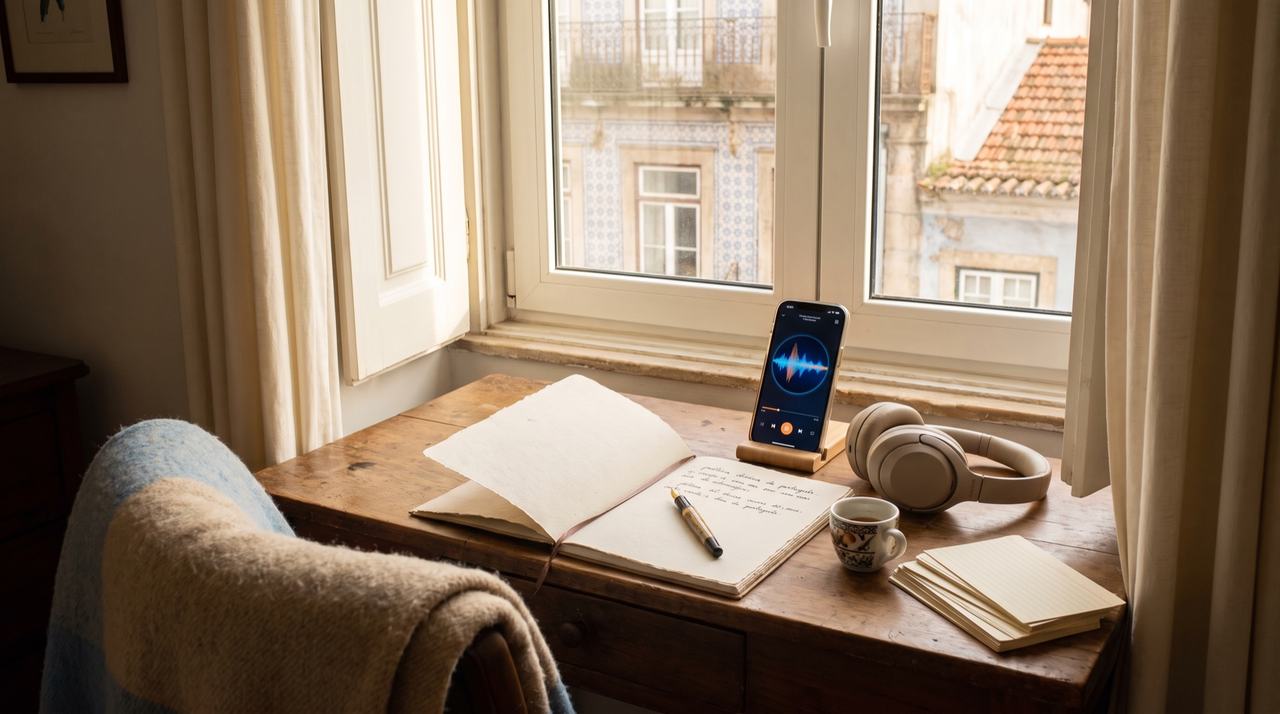
- Monday to Friday — one text a day, alternating the 25-35 and 60-80 formats. Set a timer for 12 minutes: the exam gives you limited time, and untimed practice builds false confidence.
- Count your words. Under the minimum costs points; far over the maximum invites errors. Train your sense of what 30 and 70 words feel like.
- Recycle exam themes: family, food, daily routine, transport, appointments, invitations. The same situations rotate through real papers year after year.
- Self-check with a fixed list: verb endings, gender agreement, accents, punctuation, one connector (porque, mas, depois). Checking for specific errors finds more than re-reading "for mistakes".
Then get feedback on at least some of your texts. A tutor can correct a week of texts in one session. A language-exchange partner works for free. And this is exactly why I added AI feedback to every one of the 18 writing tasks on CIPLE Ready — it flags grammar, word count, and task completion in seconds, which keeps the daily loop tight.
Speaking at home: produce, record, compare
You cannot fully simulate a paired exam alone — but you can arrive at it fluent in the formats:
- Shadow daily. Ten minutes of repeating European Portuguese audio out loud — same rhythm, same vowel reductions. This trains your mouth, not just your ear.
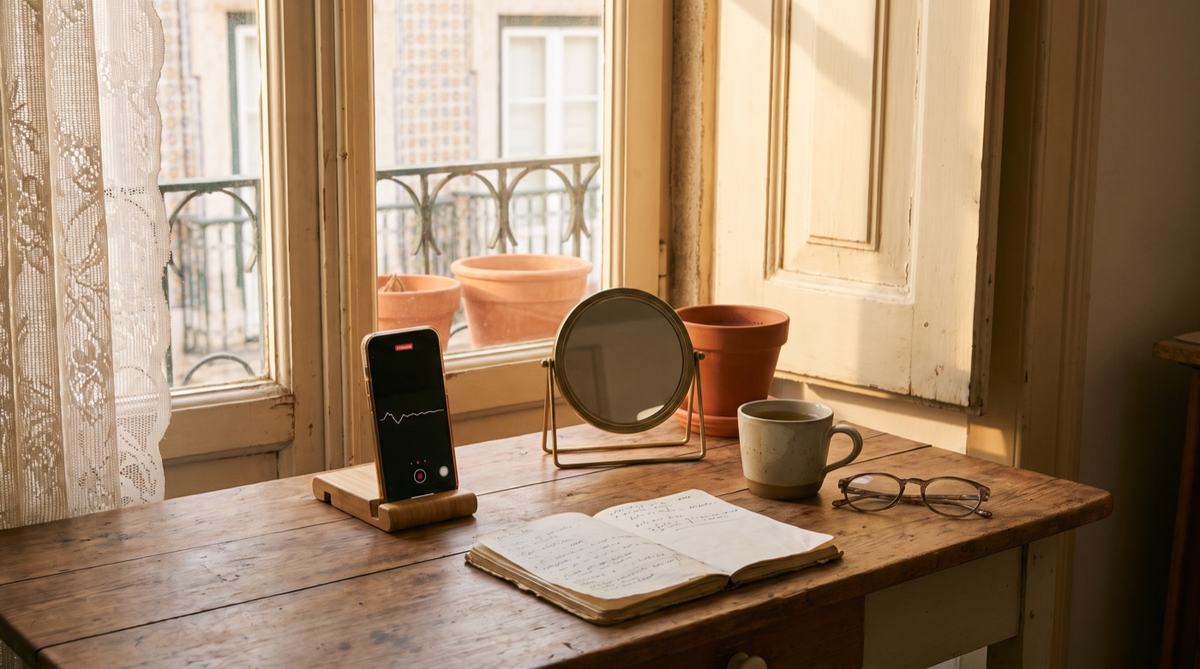
- Record one prompt a day. Introduce yourself, order at a restaurant, describe a photo from your phone. Listen back the next day — the delay makes your own errors audible.
- Drill the role-plays. Write out a skeleton for each classic scenario (shopping, doctor, hotel, restaurant): opening line, two questions you can ask, polite closing. In the exam, retrieval speed matters more than range.
- Simulate the pair format at least twice before exam day — with a partner, a tutor, or another candidate. Speaking while someone else waits their turn is its own skill.
On CIPLE Ready, the 20 speaking tasks record you, transcribe your answer, and give AI evaluation — I built that because listening back alone tells you something is off, but not always what. For the paired dynamics, though, a human still wins: that is the one thing I recommend outsourcing to a tutor even if everything else stays at home.
A weekly rhythm that fits around work
- Daily (25-30 min): one timed writing text + one recorded speaking prompt + ten minutes of shadowing.
- Twice a week: review corrected texts and re-listen to old recordings — improvement you can hear is the best motivation there is.
- Weekly: one full mock section under exam timing. Writing inside the same clock as reading, the way the real paper works.
- Final two weeks: two paired speaking simulations and a readiness check.
Frequently asked questions
Can I prepare for CIPLE writing and speaking entirely at home?
Mostly yes. The task formats are predictable and drillable. The one thing to arrange externally is feedback — a tutor, an exchange partner, or AI evaluation. Producing texts nobody checks is how errors get memorised.
Do I need a tutor?
Not necessarily — but book two or three sessions before the exam to simulate the paired speaking test. The format itself is worth rehearsing, separately from your Portuguese.
How many weeks do I need?
With 20-30 minutes a day, most A2-level candidates need 4-8 weeks to get comfortable with the formats. Production is the last skill to mature — grammar and vocabulary come first.
What if I have nobody to speak Portuguese with?
Record yourself, listen back a day later, shadow daily, use AI evaluation for structure and pronunciation — and save one or two tutor sessions for the final weeks.
Next steps: the full 4-week preparation plan, my roundup of every CIPLE prep resource, or the exam basics in What is CIPLE?