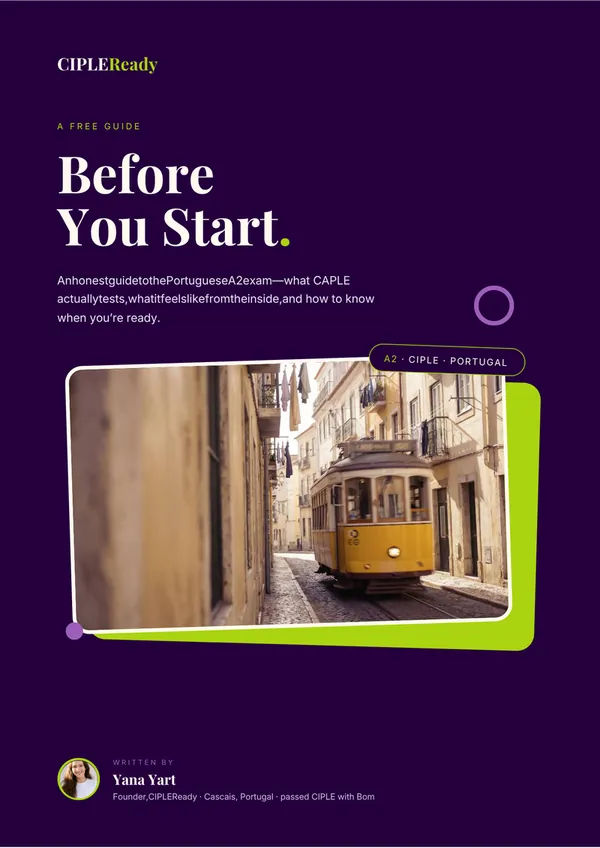
Если вы планируете подавать документы на португальское гражданство или ПМЖ, то наверняка уже слышали про экзамен CIPLE. Но что это вообще такое, как он проходит и насколько он сложный? В этой статье я собрала всё, что вам нужно о нём знать.
Как расшифровывается CIPLE?
Аббревиатура CIPLE расшифровывается как Certificado Inicial de Português Língua Estrangeira. На русский это переводится как «Начальный сертификат по португальскому как иностранному». Сам экзамен входит в систему CAPLE (Centro de Avaliação e Certificação de Português Língua Estrangeira), которую курирует Лиссабонский университет.
Сертификат CIPLE подтверждает, что вы владеете португальским на уровне A2 по Общеевропейской шкале языковых компетенций (CEFR). Именно такой уровень Португалия требует для получения гражданства и ПМЖ.
Кому нужно сдавать CIPLE?
Вам придется сдавать CIPLE, если вы:
- подаете на португальское гражданство по натурализации (после пяти и более лет проживания);
- гражданин третьей страны и запрашиваете статус постоянного резидента (ПМЖ);
- владелец «золотой визы» и планируете получить паспорт;
- оформляете гражданство через брак с гражданином Португалии (в некоторых случаях экзамен обязателен).
Некоторым заявителям сдавать тест не нужно. От экзамена освобождают детей до 18 лет, которые учатся в португальских школах, людей с инвалидностью, не позволяющей пройти тестирование, а также тех, у кого уже есть сертификат на уровень B1 и выше.
Как устроен экзамен CIPLE?
Часть 1: Чтение и письмо (45% от итоговой оценки)
Это самый объемный раздел. Вам предстоит прочитать короткие тексты вроде SMS, объявлений или газетных заметок, а также тексты подлиннее. После этого нужно будет ответить на вопросы, выбрать вариант «верно/неверно» и сопоставить факты. Кроме того, вас попросят написать два небольших текста: один на 25–35 слов (например, сообщение другу), а второй на 60–80 слов (имейл или небольшое описание).
Часть 2: Аудирование (30% от итоговой оценки)
Здесь вы будете слушать аудиозаписи диалогов, объявлений, интервью и коротких сообщений. После прослушивания нужно ответить на вопросы с вариантами ответов и выполнить задания на сопоставление. Буду откровенна, для многих самым сложным оказывается задание «фраза-место»: вы слышите предложение, и вам нужно догадаться, где оно могло прозвучать — в аптеке, школе, на почте и так далее.
Часть 3: Разговорная речь (25% от итоговой оценки)
Эту часть принимает экзаменатор, и обычно вы сдаете её в паре с еще одним кандидатом. Вам нужно будет представиться, разыграть сценку по ролям (например, покупку в магазине или визит к врачу), а затем обсудить заданную тему или описать фотографию.
Сколько баллов нужно для сдачи?
Для успешной сдачи достаточно набрать минимум 55% в сумме за все части. Это довольно мягкое требование по сравнению с другими европейскими странами. В Германии и Великобритании, например, просят уровень B1, а к нему нужно готовиться куда серьезнее.
Итоговые оценки делятся на четыре категории: Muito Bom (очень хорошо, 85–100%), Bom (хорошо, 70–84%), Suficiente (удовлетворительно, 55–69%) и Insuficiente (неудовлетворительно, ниже 55%).
Сколько это стоит?
Экзамен стоит €95, и при отказе или неявке деньги не возвращают. Регистрация закрывается за 21 день до экзамена, а оплатить нужно в течение 24 часов после регистрации, иначе её аннулируют.
Когда и где можно сдать экзамен?
Экзамены CIPLE проводят несколько раз в год в сертифицированных центрах CAPLE. Национальные сессии в Португалии (они называются CIPLE-P) обычно проходят в феврале, марте, апреле, июне, сентябре и октябре. Международные сессии выпадают на май, июль и ноябрь.
Всего в мире работает около 100 аккредитованных центров CAPLE в более чем 35 странах.
Как долго ждать результатов?
Обычно результаты публикуют через 6–7 недель после экзамена. Выпуск самого сертификата занимает еще около месяца. То есть с момента сдачи до получения заветной бумажки на руки пройдет два-три месяца. Обязательно учитывайте это, когда будете планировать подачу документов на гражданство.
Как подготовиться к CIPLE
У меня для вас хорошая новость: A2 — это базовый уровень. Если вы живете в Португалии и каждый день сталкиваетесь с языком, вы уже знаете больше, чем вам кажется. Главная сложность — понять специфику формата и научиться укладываться в отведенное время.
Вот что я советую включить в план подготовки:
- внимательно изучить формат (типы вопросов, жесткие тайминги, систему оценок);
- повторить основную грамматику A2 (времена глаголов, предлоги, местоимения);
- подтянуть словарный запас по базовым темам (здоровье, покупки, как сориентироваться в городе);
- тренировать аудирование на записях именно с европейским португальским;
- писать короткие тексты, проверять в них грамматику и считать слова;
- прорешивать пробные варианты с секундомером.
Частые вопросы
Сложный ли экзамен CIPLE? Для большинства людей, которые прожили в Португалии пару лет, он вполне по силам — нужно только нормально подготовиться. Как я уже говорила, самой коварной частью многие считают аудирование.
Можно ли сдать CIPLE за пределами Португалии? Да, тестовые центры есть по всему миру. Посмотреть все локации можно на официальном сайте CAPLE.
Сколько времени займет подготовка? Большинству кандидатов хватает от четырех до восьми недель целенаправленных занятий, при условии, что база португальского уже есть.
А что, если я не сдам? Ничего страшного. Вы можете пересдать экзамен в следующую доступную сессию. Количество попыток никто не ограничивает.
Последнее обновление: март 2026 года. Платформа CIPLE Ready никак не связана с CAPLE или Лиссабонским университетом.